
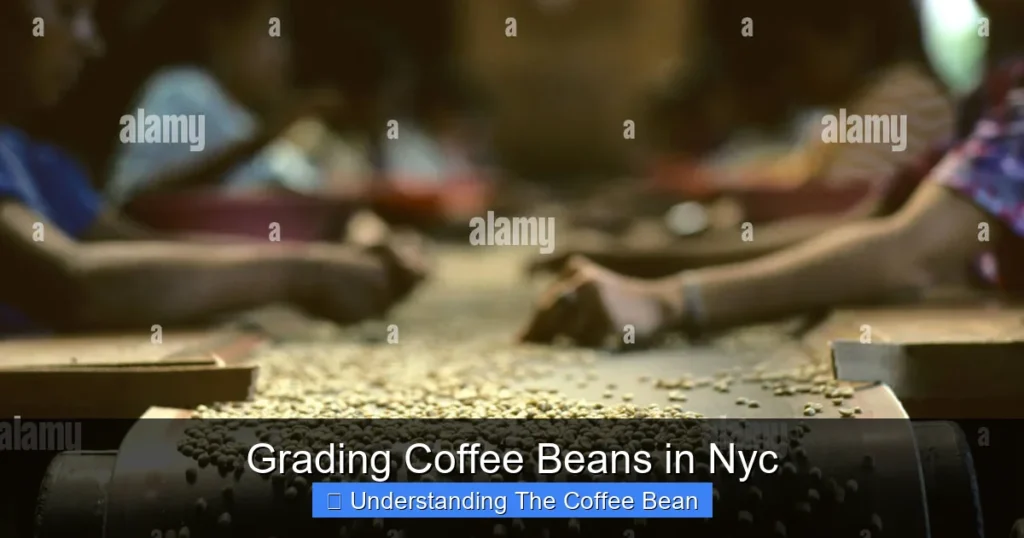
Grading coffee beans in NYC is a meticulous process that blends science, tradition, and local expertise. From specialty roasters in Brooklyn to certified Q Graders in Manhattan, the city’s coffee scene thrives on precision and passion. Understanding this grading system helps you choose better beans and appreciate the craft behind every cup.
If you’ve ever sipped a perfectly balanced pour-over in a dimly lit Brooklyn café or marveled at the rich crema on an espresso in a Manhattan roastery, you’ve likely tasted the result of careful coffee bean grading. In New York City—where coffee culture pulses through subway stations, corner bodegas, and third-wave cafes alike—grading coffee beans isn’t just a behind-the-scenes ritual. It’s a cornerstone of quality, a language spoken by roasters, baristas, and connoisseurs. But what exactly does “grading” mean, and why does it matter so much in a city that never sleeps—and never stops drinking coffee?
Grading coffee beans is the process of evaluating and classifying green (unroasted) coffee based on a set of standardized criteria. These include physical characteristics like size, shape, color, and defect count, as well as sensory qualities such as aroma, flavor, and aftertaste. In NYC, where the demand for high-quality, ethically sourced coffee is sky-high, grading ensures that only the best beans make it into your cup. Whether you’re a casual drinker or a coffee geek, understanding this system gives you a deeper appreciation for the journey from farm to filter.
The city’s vibrant coffee scene is fueled by a network of passionate roasters, importers, and certified graders who treat coffee like a craft. From small-batch roasteries in Queens to multi-location chains in SoHo, the emphasis on grading reflects a broader commitment to excellence. But grading isn’t just about prestige—it’s about consistency, transparency, and flavor. In a market flooded with options, grading helps cut through the noise and identify truly exceptional beans.
Key Takeaways
- Grading ensures quality: Coffee grading in NYC follows strict standards to evaluate bean size, density, defects, and flavor potential.
- Q Grading is the gold standard: Certified Q Graders use sensory analysis to score beans on aroma, flavor, aftertaste, acidity, and body.
- Local roasters play a key role: NYC roasters often source and grade beans themselves, ensuring freshness and traceability.
- Defects matter: Even one primary defect can drop a bean’s grade, affecting its market value and taste.
- Altitude and processing influence grade: Higher altitudes and washed processing often lead to higher grades due to cleaner, brighter flavors.
- Grading affects pricing: Higher-grade beans command premium prices, especially in NYC’s competitive specialty coffee market.
- Consumers benefit from transparency: Knowing how beans are graded helps you make informed choices and support ethical sourcing.
📑 Table of Contents
The Science and Art of Coffee Grading
Coffee grading might sound like a dry, technical process, but in reality, it’s a blend of science and art. At its core, grading is about assessing quality—but quality in coffee is multidimensional. It’s not just about how a bean looks; it’s about how it tastes, smells, and feels in the mouth. In NYC, where coffee professionals are constantly pushing boundaries, grading has evolved into a nuanced practice that respects tradition while embracing innovation.
The foundation of coffee grading lies in physical evaluation. Green coffee beans are sorted by size using screens with specific hole diameters. Larger beans, often labeled as “screen 18” or higher, are typically considered higher quality because they tend to roast more evenly and develop richer flavors. Density also plays a role—denser beans, often grown at higher altitudes, are more sought after because they produce a more complex cup. Color is another indicator; uniform, greenish-gray beans are preferred over discolored or bluish ones, which may signal improper drying or storage.
But physical traits only tell part of the story. The real magic happens during sensory evaluation, also known as cupping. This is where certified Q Graders—highly trained coffee tasters—assess the bean’s potential through a standardized tasting protocol. They evaluate aroma (the dry and wet fragrance), flavor, aftertaste, acidity, body, balance, uniformity, cleanliness, and overall sweetness. Each category is scored on a 10-point scale, and the total score determines the bean’s grade.
In NYC, many roasters have their own Q Graders on staff or work closely with independent graders. For example, Sey Coffee in Bushwick employs in-house cupping experts who taste every batch before roasting. This level of scrutiny ensures that only beans scoring 80 points or higher—the threshold for “Specialty Grade”—make it to their shelves. It’s a rigorous process, but one that pays off in the cup.
Who Grades Coffee Beans in NYC?
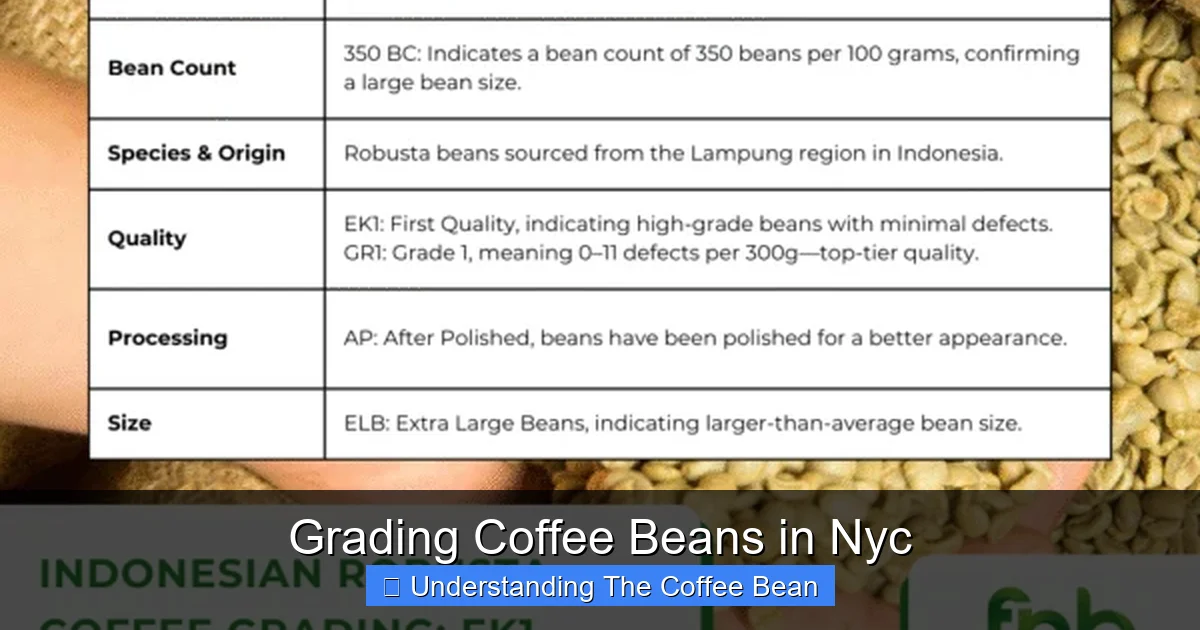
Visual guide about Grading Coffee Beans in Nyc
Image source: fnb.coffee
You might be wondering: who actually does the grading? In New York City, the answer is a mix of professionals, from certified experts to passionate roasters. The most authoritative graders are Q Graders—individuals certified by the Coffee Quality Institute (CQI), a nonprofit arm of the Specialty Coffee Association (SCA). These graders undergo intensive training and must pass rigorous exams to earn their certification. They’re the gold standard in coffee evaluation, and many work with importers, exporters, or large roasting companies.
But Q Graders aren’t the only ones grading beans in NYC. Many local roasters have developed their own grading systems or adapted industry standards to fit their needs. For instance, Partners Coffee, with locations across Brooklyn and Manhattan, uses a hybrid approach: they rely on Q Grader assessments for sourcing but also conduct internal cupping sessions to ensure consistency across batches. This dual-layer system allows them to maintain high standards while staying agile in a fast-paced market.
Importers and green coffee brokers also play a key role. Companies like Cafe Imports and Royal Coffee, both with strong ties to NYC’s coffee community, work directly with farmers and cooperatives to grade beans at origin. They send samples to NYC for further evaluation, where roasters can taste and assess them before committing to a purchase. This farm-to-roaster pipeline ensures transparency and quality control from the very beginning.
Even baristas get involved. At places like Devoción in Williamsburg, baristas participate in weekly cupping sessions to understand the nuances of different beans. While they may not be certified graders, their feedback helps shape purchasing decisions and brewing methods. This collaborative approach reflects NYC’s culture of shared knowledge and continuous learning.
The NYC Coffee Grading Process: Step by Step
So, how exactly does grading happen in New York City? While the specifics can vary by roaster or importer, the general process follows a consistent framework. It begins with sourcing: roasters identify farms or cooperatives that produce high-quality beans, often through direct trade relationships. Once a sample arrives in NYC, the grading process kicks into gear.
The first step is visual inspection. A sample of green coffee—usually around 350 grams—is spread out on a table under good lighting. Graders look for defects such as black beans, sour beans, broken pieces, or insect damage. These are categorized as either “primary” or “secondary” defects, with primary defects (like full blacks or pods) having a bigger impact on the grade. The number and type of defects determine whether a bean meets specialty standards.
Next comes size and density sorting. Beans are run through a series of screens to separate them by size. In NYC, roasters often prefer larger beans (screen 16 and above) for their even roasting properties. Density is assessed using a float test—beans that sink are denser and generally higher quality. Some roasters also use moisture meters to ensure beans are properly dried (ideally between 10-12% moisture content).
Then it’s time for cupping. The sample is roasted to a light profile (usually around 8-10 minutes), then ground and steeped in hot water for four minutes. Graders break the crust, sniff the aroma, and slurp the coffee to evaluate flavor. They score each attribute and calculate a total. Only beans scoring 80 or above are considered specialty grade—the benchmark for premium coffee in NYC.
After grading, the beans are either accepted for roasting or rejected. If accepted, they’re logged into inventory with detailed notes on origin, processing method, and cupping score. This data helps roasters track consistency and make informed decisions about future purchases.
Why Grading Matters in NYC’s Coffee Culture
In a city known for its fast pace and high standards, coffee grading isn’t just a formality—it’s a necessity. NYC consumers are savvy. They care about where their coffee comes from, how it’s grown, and how it’s roasted. Grading provides a framework for that transparency. When a bag of coffee lists a Q Grader score or mentions “zero primary defects,” it’s not just marketing—it’s a promise of quality.
Grading also supports ethical sourcing. High-grade beans often come from farms that pay fair wages, use sustainable practices, and invest in community development. By prioritizing graded coffee, NYC roasters help create demand for responsibly produced beans. This, in turn, encourages more farmers to adopt quality-focused practices.
Moreover, grading drives innovation. In a competitive market, roasters must differentiate themselves. Some focus on ultra-high-scoring microlots—small batches from specific plots of land that score 90 or above. Others experiment with processing methods like anaerobic fermentation or carbonic maceration to enhance flavor profiles. Grading helps validate these innovations by providing an objective measure of success.
For consumers, understanding grading empowers better choices. Instead of guessing based on packaging or price, you can look for key indicators like cupping score, defect count, and processing method. This knowledge turns coffee shopping from a gamble into a informed decision.
Where to Find Graded Coffee in NYC
If you’re eager to taste the difference graded coffee makes, NYC is the perfect place to start. The city is home to dozens of roasteries and cafes that prioritize quality and transparency. Here are a few standout spots:
Sey Coffee (Bushwick, Brooklyn): Known for their light-roast, single-origin offerings, Sey sources only specialty-grade beans and publishes detailed cupping notes online. Their beans often score in the high 80s, with floral, tea-like profiles.
Devoción (Williamsburg, Brooklyn): This roastery imports fresh green coffee directly from Colombian farms and roasts within 48 hours of arrival. Their beans are graded rigorously, and the café offers immersive cupping experiences.
Partners Coffee (Multiple Locations): With a focus on direct trade and sustainability, Partners uses Q Grader assessments to select beans. Their seasonal offerings highlight unique processing methods and high cupping scores.
Hi-Collar (East Village, Manhattan): While known for their Japanese-inspired coffee program, Hi-Collar also offers single-origin pour-overs made from graded beans. Their baristas are trained to highlight the nuances of each cup.
Toby’s Estate (Williamsburg, Brooklyn): One of NYC’s original third-wave roasters, Toby’s uses a combination of Q Grader input and internal cupping to grade beans. Their espresso blends are crafted for balance and consistency.
Many of these roasters also sell bags of graded coffee online, complete with QR codes that link to farm information and cupping scores. This level of detail is a testament to NYC’s commitment to quality and transparency.
The Future of Coffee Grading in NYC
As coffee culture continues to evolve, so too will the practice of grading. In NYC, we’re already seeing trends that could reshape the landscape. One is the rise of blockchain technology for traceability. Some roasters are experimenting with digital ledgers that track a bean’s journey from farm to cup, including grading data at each stage. This could make the process even more transparent and trustworthy.
Another trend is the growing interest in alternative grading systems. While the SCA’s 100-point scale dominates, some roasters are developing their own frameworks that emphasize sustainability, farmer equity, and environmental impact. These “beyond-grade” metrics could become as important as cupping scores in the future.
Technology is also playing a bigger role. AI-powered cupping tools and digital aroma analyzers are being tested in labs and roasteries. While they won’t replace human graders anytime soon, they could help standardize evaluations and reduce subjectivity.
Finally, consumer education is on the rise. More cafes are offering cupping sessions, workshops, and tasting flights to help customers understand grading. This democratization of knowledge ensures that the culture of quality continues to grow.
In the end, grading coffee beans in NYC is about more than just numbers and scores. It’s about respect—for the farmers who grow the beans, the roasters who craft them, and the drinkers who savor them. It’s a system built on passion, precision, and a shared love for great coffee.
Frequently Asked Questions
What is coffee grading?
Coffee grading is the process of evaluating green coffee beans based on physical traits like size, density, and defects, as well as sensory qualities like flavor and aroma. It helps determine the bean’s quality and market value.
Who grades coffee beans in NYC?
In NYC, coffee beans are graded by certified Q Graders, roasters, importers, and sometimes baristas. Many roasters have in-house cupping teams or work with independent graders to ensure quality.
What does a Q Grader do?
A Q Grader is a certified coffee taster trained by the Coffee Quality Institute. They evaluate beans using a standardized cupping protocol, scoring aroma, flavor, acidity, body, and other attributes on a 100-point scale.
What is a specialty-grade coffee?
Specialty-grade coffee is any bean that scores 80 points or higher on the SCA’s 100-point scale. These beans have minimal defects and exhibit distinctive, high-quality flavors.
Why do defects affect coffee grade?
Defects like black or sour beans can introduce off-flavors and reduce overall cup quality. Even a small number of primary defects can lower a bean’s grade and disqualify it from specialty status.
Where can I buy graded coffee in NYC?
You can find graded coffee at specialty roasteries like Sey Coffee, Devoción, Partners Coffee, and Toby’s Estate. Many sell bags online with detailed cupping scores and origin information.