

I’ve spent years testing grinders at the brew bar and in my home coffee lab, and there’s one question I hear all the time: how does a burr grinder work? In simple terms, a burr grinder uses two abrasive surfaces (burrs) to crush coffee beans into uniformly sized particles, which leads to consistent extraction and better flavor. Compared to blade grinders, burrs deliver control, precision, and repeatable results. In this guide, I’ll break down the mechanics, the parts, the differences between flat and conical burrs, and the practical steps I use to dial in a perfect grind for any brew method.

Source: www.home-barista.com
What A Burr Grinder Actually Does
A burr grinder is a precision milling machine for coffee. Instead of chopping, it shears beans between two burrs with a narrow gap that you adjust. That controlled gap produces predictable particle sizes, which is the foundation of balanced extraction and flavor clarity.
Here’s what that means in your cup:
- More sweetness and balance because particles extract at similar rates.
- Less bitterness and astringency from over-extracted fines.
- Better body and clarity for espresso, pour-over, and French press.
- Consistency from day to day, so your favorite recipe stays dialed in.
From my experience, the biggest upgrade most coffee lovers can make is moving from a blade grinder to a properly set burr grinder. The difference is immediate and unmistakable.

Source: www.youtube.com
The Key Components And How They Interact
Every burr grinder has a few core parts that shape grind quality:
– Burrs: Two abrasive rings or cones (flat or conical) that crush beans. Materials include hardened steel and ceramic. Steel often offers sharper edges and faster cutting; ceramic can last longer and resist heat but may be more brittle.
– Adjustment mechanism: Changes the burr gap. Stepped systems click through preset intervals; stepless systems let you fine-tune precisely.
– Motor and gearbox: Control speed and torque. Lower RPM with higher torque can reduce heat and static; higher RPM can be faster but may increase heat.
– Hopper and feeder: Guide beans into the burrs. Baffles and feeders influence flow and consistency.
– Chute and anti-static features: Help grounds exit cleanly with less clumping and retention.
Tip from the bar: a stable burr carrier and tight tolerances matter more than raw power. A well-aligned, slower grinder often beats a fast but wobbly one.
Source: www.colourmyliving.com
Step-By-Step: How A Burr Grinder Works During A Grind
Here’s the typical journey of a coffee bean inside a burr grinder:
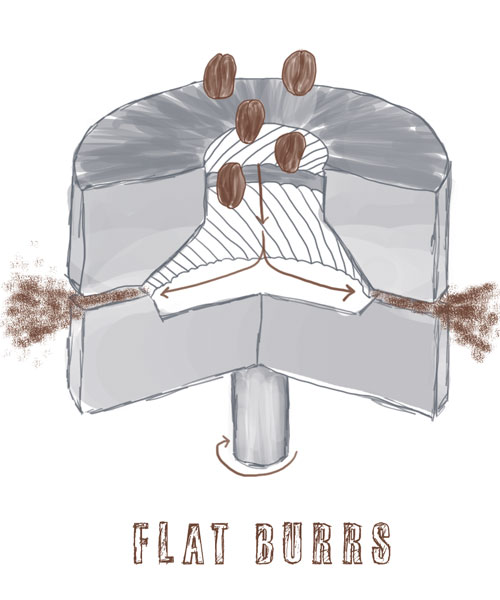
1. Feeding: Beans drop from the hopper into the burr inlet. Gravity or a feeder brings them into the cutting zone.
2. Pre-break: The outer burr edges crack beans into coarse fragments.
3. Shearing and reduction: As fragments move toward the narrowest gap, cutting teeth shear them down to target size.
4. Classification by gap: Only particles small enough to pass through the burr gap escape; larger ones keep circulating until they’re reduced further.
5. Exit and discharge: Grounds flow through the chute. Anti-static treatments and declumpers try to keep the stream fluffy and even.
When you adjust finer, you shrink the burr gap. That increases resistance, slows feed rate, and produces smaller particles. Coarser settings open the gap, increase throughput, and yield larger particles.
Source: www.reddit.com
Flat vs. Conical Burrs: What’s The Real Difference?
I’ve used both in cafes and at home, and here’s the practical breakdown:
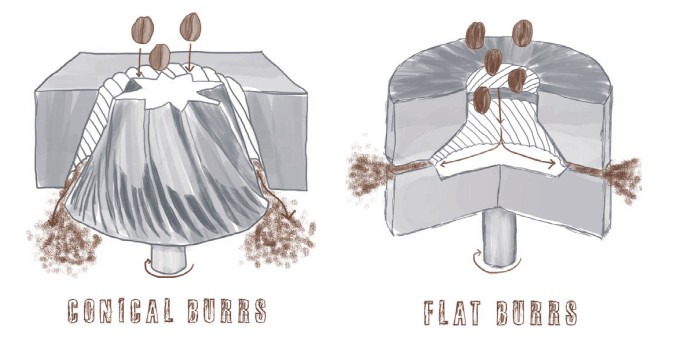
– Conical burrs:
– Shape: A cone inside a ring.
– Pros: Usually quieter, often lower RPM, forgiving alignment, good for home use. Can produce a slightly wider distribution helpful for body and crema in espresso.
– Cons: Some models show more fines depending on design.
– Flat burrs:
– Shape: Two parallel discs.
– Pros: Often superb clarity and uniformity, great for nuanced pour-overs and modern espresso profiles.
– Cons: Can be louder, may retain more grounds without good design, can be more sensitive to alignment.
Neither is objectively better; it’s about your taste and brew method. For bright, layered pour-overs, I lean flat. For cozy, syrupy espresso or a versatile all-rounder, I often pick conical.
Grind Size, Extraction, And Flavor: Connecting The Dots
Grind size determines surface area and flow rate, which drive extraction:
– Finer grind: Higher surface area and slower flow. Increases extraction. Great for espresso and moka pots.
– Coarser grind: Lower surface area and faster flow. Decreases extraction. Ideal for French press and cold brew.
Targets I use as a starting point:
- Espresso: Fine, like powdered sugar. Typical brew ratio 1:2 in 25–35 seconds.
- Pour-over (V60/Chemex): Medium to medium-fine. Aim for 2.5–4 minutes total brew time.
- Drip machine: Medium. 4–6 minutes contact time depending on batch size and filter.
- French press: Coarse. 4 minutes steep, then press.
- Cold brew: Very coarse. 12–18 hours steep at room temp or fridge.
If your coffee tastes sour or thin, grind finer. If it’s bitter or drying, grind coarser. Adjust one step at a time and keep notes.
Dialing In: My Practical Workflow
This is the routine I teach new baristas:
1. Choose a baseline: Start with the manufacturer’s recommended setting for your brew method.
2. Weigh dose and yield: Use a scale. For V60, I often start at 15 g coffee to 250 g water.
3. Time and taste: Note brew time and flavor. Sour/under? Go finer. Bitter/over? Go coarser.
4. Make micro-adjustments: Move in small increments, especially with espresso.
5. Keep the variables stable: Use the same water, temperature, and recipe while adjusting grind.
Personal tip: I purge 1–2 grams after large adjustments to clear old grounds, especially on bigger grinders with retention.
Heat, Static, And Retention: The Hidden Variables
Even a good grinder can misbehave due to physics:
– Heat: Excessive RPM or long grinding sessions can warm the burrs, slightly changing particle size and adding baked flavors. Short bursts or lower RPM help.
– Static: Dry air and fast grinding can cause clingy grounds and clumps. The Ross Droplet Technique (a light mist on beans before grinding) minimizes static without harming burrs.
– Retention: Grounds that remain in the grinder can stale and affect your next cup. Single-dosing grinders and anti-retention chutes help. A light bellows puff can clear the chamber on some models.
I once chased a “mystery bitterness” for days before realizing the café grinder retained 2–3 grams between shots. Purging fixed it instantly.
Maintenance, Alignment, And Longevity
Good grinders last years with basic care:
– Routine cleaning: Brush burrs weekly and deep-clean monthly to remove oils. Avoid soapy water on steel burrs; use grinder-safe tablets or dry brushes.
– Check alignment: If shots channel or pour-overs taste muddy, misalignment may be the culprit. Some models allow user alignment; others need a pro.
– Track burr wear: Dull burrs create more fines and slow your grind. Many steel burr sets last 500–1000+ pounds of coffee; ceramic can last longer but varies by roast and use.
– Recalibrate for roast: Dark roasts are brittle and produce fines easily; consider coarser settings. Light roasts are dense; you may need finer settings or a more powerful grinder.
A small maintenance log helps you spot patterns early.
Choosing The Right Burr Grinder For You
Match the grinder to your brew habits:
– For espresso lovers: Look for stepless micro-adjustment, low retention, and stable burr carriers. Consider 48–64 mm quality burrs.
– For pour-over and drip: Consistency in the medium range matters most. Flat burrs often shine, but good conicals do great too.
– For versatility and single-dosing: A grinder with low retention, clear markings, and easy burr access saves time.
– For quiet kitchens: Conicals at low RPM are typically gentler on the ears.
Questions I ask before recommending:
- What brew methods do you use most?
- Do you single-dose or keep beans in the hopper?
- How much counter space and noise tolerance do you have?
- What’s your budget for burr quality and longevity?
Common Mistakes And How To Avoid Them
– Chasing flavor with dose before fixing grind: Set grind first; dose tweaks come later.
– Ignoring water quality: Poor water masks grinder improvements. Use good mineral balance.
– Skipping purges after major changes: Old grounds skew results.
– Over-relying on numbers: Factory marks vary. Taste is the real calibration.
– Neglecting cleaning: Oil buildup equals rancid flavors and sticky chutes.
Lesson learned: When coffee suddenly “goes bad,” I check grind, water, and cleanliness before blaming the beans. Nine times out of ten, the grinder needs a brush or a tiny adjustment.
Frequently Asked Questions of How does a burr grinder work?
Is a burr grinder really better than a blade grinder?
Yes. Burr grinders produce uniform particle sizes, which improves extraction and flavor. Blade grinders chop unevenly, leading to bitter fines and under-extracted boulders.
What’s the difference between stepped and stepless adjustment?
Stepped grinders move in preset clicks, making it easy to switch settings. Stepless grinders allow infinite micro-adjustments, ideal for fine-tuning espresso.
Do flat burrs taste different from conical burrs?
Often, yes. Flat burrs can emphasize clarity and separation of flavors, while conicals may highlight body and perceived sweetness. Preference depends on your palate and brew method.
How often should I clean my burr grinder?
Brush weekly if you use it daily and deep-clean monthly. If you grind dark roasts or oily beans, increase frequency to prevent buildup.
Can I use one burr grinder for both espresso and pour-over?
Many can, especially low-retention models with clear markings. However, switching between fine espresso and coarser pour-over may require purging and careful tracking of settings.
Why does my grinder produce clumps?
Static, humidity, and burr speed can cause clumps. Try a light mist (RDT), break clumps before dosing, or look for grinders with anti-static features.
When should I replace burrs?
If your grind slows noticeably, shots run inconsistently, or flavor turns harsh despite good technique, inspect burr edges. Many steel burrs last hundreds of pounds; usage and roast level matter.
Final Thoughts And Next Steps
A burr grinder works by controlling particle size with precision, and that control unlocks sweeter, clearer, more balanced coffee. Choose the right burrs for your style, keep them clean, and make small, deliberate adjustments. With a simple workflow and a bit of practice, your grinder becomes a reliable tool that translates great beans into great cups every single day.
Try one actionable step this week: log your grind setting, brew time, and taste notes for your favorite brew. Adjust one click at a time and re-taste. You’ll be amazed how quickly you can dial in your perfect cup.
If this guide helped, subscribe for more brew tips, ask a question in the comments, or explore my other deep-dives on espresso dialing and pour-over techniques.
Watch This Video on How does a burr grinder work?