

I’ve spent years researching nutrition and testing habits that actually move the needle on energy, focus, and long-term health. Black coffee is one of those rare daily rituals that can be both enjoyable and genuinely beneficial when used wisely. If you’ve ever wondered, “What are the benefits of drinking black coffee?” I’ll walk you through the science, the practical how-tos, and the real-life lessons I’ve learned from making black coffee part of my routine.
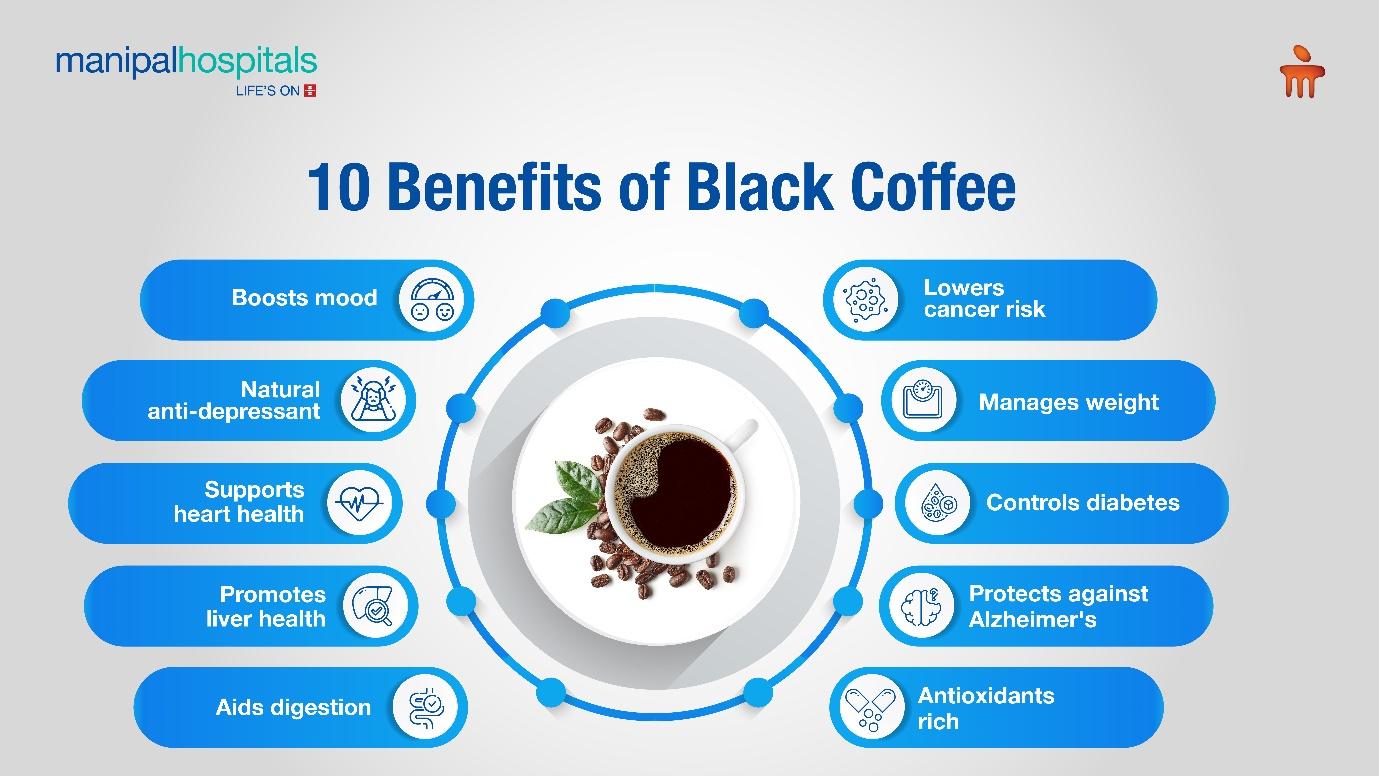
Source: www.manipalhospitals.com
What Is Black Coffee?
Black coffee is simply brewed coffee without added milk, cream, sugar, or syrups. It’s naturally very low in calories (about 2 calories per 8-ounce cup), rich in bioactive compounds like chlorogenic acids and polyphenols, and typically contains about 80–120 mg of caffeine per 8-ounce serving, depending on the beans and brew method.
Why it matters:
- You get flavor and functional compounds without excess calories or added sugars.
- You keep the full antioxidant profile unaltered by dairy or sweeteners.
- You can better control caffeine intake and timing for performance and sleep.
Source: avtbeverages.com
Science-Backed Benefits Of Drinking Black Coffee
I love black coffee for the clarity it gives me, but the benefits go deeper than just a morning kick. Here are the big wins supported by research and clinical observations.
1) Mental Focus, Reaction Time, And Mood
– Caffeine blocks adenosine receptors, reducing perceived fatigue and sharpening alertness and reaction time.
– Moderate caffeine (about 1–3 mg/kg body weight) can improve sustained attention, working memory, and vigilance.
– Many people report better mood and motivation with a modest dose, especially in the morning.
Practical example: On writing days, I drink one 8–10 oz cup about 30 minutes before deep work. My sweet spot is roughly 100 mg of caffeine; more than that and I get jittery.
2) Metabolism, Fat Oxidation, And Weight Management
– Caffeine increases thermogenesis and fat oxidation, especially pre-exercise.
– Chlorogenic acids may support glucose metabolism, which can help curb energy crashes.
– Black coffee during a fasting window adds virtually no calories, which can support intermittent fasting adherence.
Tip: If weight management is your goal, use black coffee as a pre-workout or mid-morning bridge, not as an excuse to skip real meals.
3) Heart, Liver, And Metabolic Health
– Large cohort studies associate moderate coffee intake with a lower risk of cardiovascular disease and all-cause mortality compared with non-intake.
– Habitual coffee consumption is linked to a lower risk of type 2 diabetes, potentially due to improved insulin sensitivity and antioxidant effects.
– Coffee intake is consistently associated with better liver outcomes, including lower risk of liver fibrosis and certain liver diseases.
Context matters: Benefits show up most consistently at moderate intakes (about 2–4 cups/day for most adults), and brewing methods influence cholesterol-related compounds.
4) Antioxidants And Cellular Defense
– Coffee is a leading source of dietary antioxidants in many diets, delivering polyphenols that help counter oxidative stress.
– These compounds may support endothelial function and reduce low-grade inflammation over time.
Analogy: Think of antioxidants as your cells’ cleanup crew after the daily wear-and-tear of metabolism and stress.
5) Exercise Performance And Recovery
– Caffeine can increase endurance performance and perceived effort reduction, making workouts feel more manageable.
– For strength sessions, many lifters experience improved focus and slight power benefits with a pre-lift dose.
Protocol I use: 60–90 minutes pre-run or 30–45 minutes pre-lift, one cup of black coffee. Keep hydration on point to avoid cramps.
6) Digestion, Gut, And Hydration Myths
– Coffee can stimulate gastric motility, which some people find helpful for regularity.
– Despite the myth, coffee is not meaningfully dehydrating for habitual drinkers; it contributes to daily fluid intake.
– If you have reflux, acidity can be a trigger. Consider darker roasts or cold brew, which often feel smoother.
Source: www.femina.in
How Much And When To Drink For Best Results
Finding your personal sweet spot is key. I learned the hard way that more isn’t better—better is better.
Recommended ranges:
- Most healthy adults: Up to 400 mg caffeine/day (roughly 3–4 standard 8-ounce cups, depending on brew).
- Pregnancy and breastfeeding: Aim for 200 mg/day or less.
- Timing: Avoid caffeine within 6–8 hours of bedtime if you’re sensitive to sleep disruption.
Smart timing ideas:
- Morning clarity: 60–90 minutes after waking (letting natural cortisol peak first).
- Pre-workout: 30–60 minutes before activity.
- During fasting: Black coffee can help adherence without breaking most fasting protocols.
Who Should Be Cautious And Potential Side Effects
Even good tools have limits. Here’s where I’ve seen issues arise.
Who should be cautious:
- People with anxiety, panic disorder, or high stress: Caffeine can amplify symptoms.
- Individuals with GERD or ulcers: Acidity may aggravate symptoms.
- Those with arrhythmias or uncontrolled hypertension: Get medical guidance before regular use.
- People who are pregnant or breastfeeding: Use conservative limits.
- Those on certain medications: Some drugs interact with caffeine; check with a clinician.
Possible side effects:
- Jitters, rapid heartbeat, or nervousness from excessive intake.
- Sleep disruption, particularly with afternoon or evening cups.
- Digestive discomfort in sensitive individuals.
- Temporary blood pressure increases in caffeine-naive users.
Mistake to avoid: Chasing energy dips with more coffee. Address sleep, nutrition, and stress first; use black coffee as a complement, not a crutch.
Brew Better: Practical Tips For Maximum Benefits
Great coffee isn’t luck—it’s a repeatable process. Here’s what’s worked for me.
Beans and grind:
- Choose freshly roasted, high-quality beans; roast date within 2–4 weeks is ideal.
- Grind just before brewing; medium-fine for pour-over, coarser for French press.
- If acidity bothers you, try medium-dark roasts or cold brew.
Water and ratios:
- Use filtered water at 195–205°F for hot methods.
- Start with a 1:15–1:17 coffee-to-water ratio by weight and adjust to taste.
- For cold brew, try 1:5 concentrate for 12–16 hours, then dilute 1:1.
Brew methods I rely on:
- Pour-over for clarity and balanced flavor.
- AeroPress when I want fast, clean cups with travel-friendly gear.
- French press for body and richness.
- Cold brew for low-acidity, smooth results.
Flavor without calories:
- Sprinkle cinnamon or add a dash of unsweetened cocoa.
- Try a pinch of salt to soften bitterness in over-extracted cups.
My Experience And Lessons Learned
When I first switched to black coffee, I missed the sweetness. After two weeks, my palate adjusted, and I started tasting chocolate, berry, and nutty notes I’d never noticed. I also tracked my sleep. One afternoon double-espresso wrecked my bedtime, so I set a hard caffeine cutoff at 2 p.m.—problem solved.
What I learned:
- One high-quality cup timed well beats three random cups.
- Hydration matters. I pair each coffee with a glass of water.
- Intentional pauses help. I take one caffeine-light day each week to keep sensitivity intact.
Practical takeaway: Treat black coffee like a performance tool. Decide your dose, timing, and brew method in advance—don’t leave it to impulse.
Frequently Asked Questions Of What Are The Benefits Of Drinking Black Coffee?
Does Black Coffee Help With Weight Loss?
Black coffee can support weight management by slightly increasing thermogenesis and fat oxidation, especially before exercise. It’s low in calories, which helps if you’re reducing overall intake. It’s not a magic bullet; pair it with balanced nutrition and activity.
How Many Cups Of Black Coffee Are Safe Per Day?
For most healthy adults, up to 400 mg of caffeine per day is considered safe, which is roughly 3–4 cups depending on brew strength. If you’re pregnant, aim for 200 mg or less. Monitor how you feel and adjust.
Will Black Coffee Break My Fast?
Plain black coffee is very low in calories and generally considered compatible with most intermittent fasting approaches. If you’re fasting for strict autophagy or lab measurements, ask your clinician, but for typical time-restricted eating, it’s fine.
Is Black Coffee Dehydrating?
Not meaningfully for regular coffee drinkers. Coffee contributes to daily fluid intake. If you’re sensitive, balance each cup with water to stay ahead on hydration.
Which Brew Method Is Best For Health?
Filtered methods (pour-over, drip, AeroPress with paper) reduce diterpenes that can raise LDL cholesterol. Unfiltered methods (French press, Turkish) retain more oils and flavor. Choose filtered if you’re concerned about cholesterol; otherwise, pick the taste and feel you enjoy.
Can Black Coffee Raise Blood Pressure?
Caffeine can cause a short-term rise in blood pressure, especially in people who rarely consume it. Habitual drinkers often see smaller effects. If you have hypertension, monitor your response and consult your clinician.
Conclusion
Black coffee can be a powerful ally for energy, focus, metabolic health, and exercise performance—when you personalize dose, timing, and brew method. My best advice: start small, track how you feel, and treat coffee as a supportive habit, not a substitute for sleep, nutrition, or stress management. Try one intentional cup tomorrow morning, brewed well and timed for your goals, and notice the difference it makes.
Ready to go deeper? Subscribe for more evidence-based guides, share your favorite brew method in the comments, and explore additional resources to optimize your daily coffee ritual.
Watch This Video on What are the benefits of drinking black coffee?